
Before you dial, use the official TIM Mail service page, because Alice Mail is presented there under the TIM Mail name; the login process is described as available from a computer, smartphone, or tablet, provided you have the complete email address and password.
Open the official TIM website, locate the TIM Mail sign-in area, enter the full Alice Mail address, type the password exactly, and select the login button. After authentication, open Inbox and verify the sender, subject, unread status, and message folders before interacting with any email.
| 📌 | Current name: Alice Mail is presented through the TIM Mail service. |
| 🔗 | Official access: Start from the TIM website rather than an unverified login page. |
| ✉️ | Username: Enter the complete email address, including its domain. |
| 🔐 | Password: Preserve capital letters, symbols, and numbers exactly. |
| 📥 | Inbox check: Confirm that messages, folders, and unread indicators load correctly. |
| ⚠️ | Access failure: Check the address, saved credentials, browser session, and official recovery route. |
What You Need Before Starting the Alice Mail Login
Still, the fastest route begins with three verified items: the complete Alice Mail address, the current password, and a secure official access page. Prepare them before opening the sign-in form, since an incomplete address or an old saved credential can create an error that looks like a service failure.
Check the address character by character. An account ending in @alice.it is not interchangeable with a different domain, even when the local username looks identical. Small details matter.
Check the browser address before entering credentials. The page should use a secure connection and belong to the official TIM domain. A copied search result, advertisement, or message link deserves extra scrutiny because a convincing design does not prove that the form is genuine.
Check these prerequisites before proceeding:
- The full Alice Mail email address is available.
- The password is known and not merely remembered from an old browser prompt.
- The internet connection is active.
- The browser is updated and JavaScript is not being blocked by an extension.
- Duplicate login tabs are closed.
Still, Alice Mail and TIM Mail terminology can cause unnecessary hesitation. The official TIM service page is the right reference for the current service name and access path; do not assume that an older bookmark remains valid forever.
Check the page destination before typing anything. If the branding changes to TIM Mail, that alone is not a problem when the address remains on the official TIM domain. If the page uses a misspelled domain, an unusual suffix, or an urgent request for unrelated personal information, stop.
How to Log In to Alice Mail Step by Step
Still, the Alice Mail login requires a simple sequence: open the official TIM Mail page, find the sign-in form, enter the complete address, enter the password, and submit the form. The account page or inbox should appear only after the service accepts both credentials.
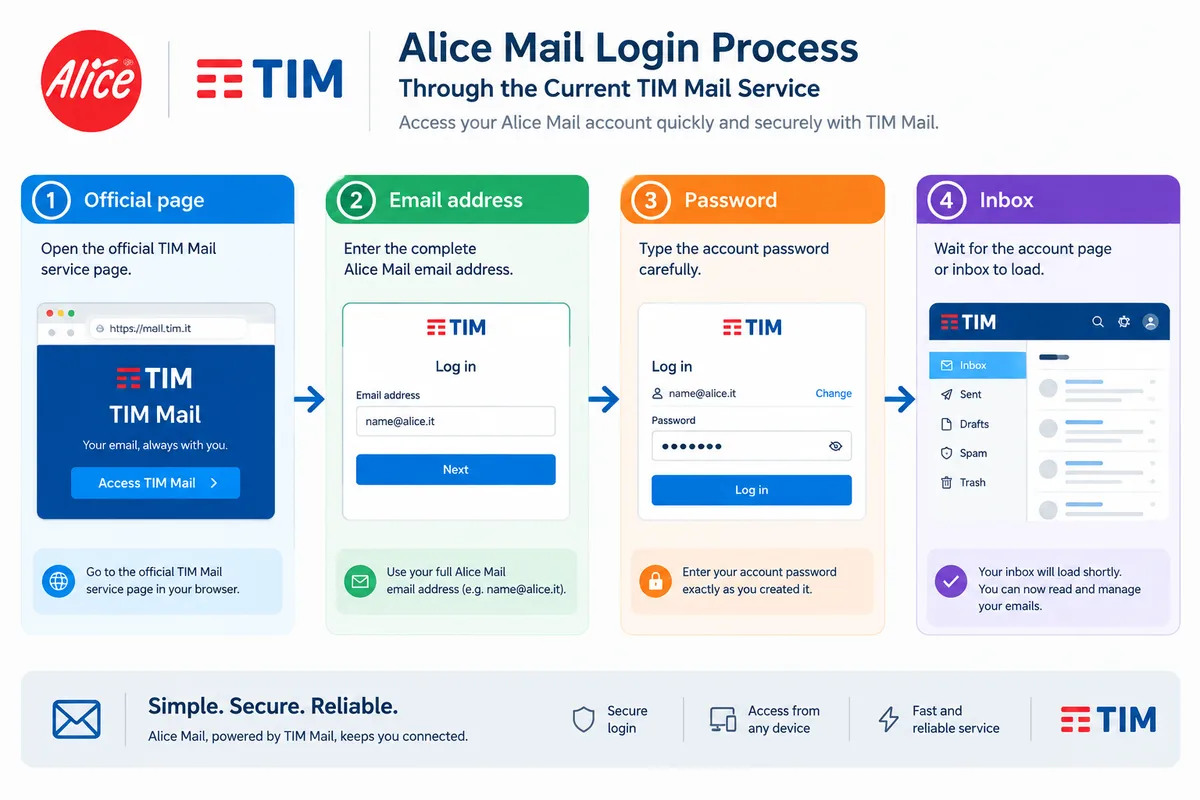
Step 1: Open the official TIM Mail page
Check the current official TIM Mail service page at TIM’s official Mail service, then locate the access control or sign-in option. Use the page itself rather than an old address copied from a forum.
Check the connection indicator in the browser. A secure connection protects the transmission channel, yet it does not make an imitation domain trustworthy; the domain name still needs to be correct.
Step 2: Enter the complete email address
Check the username field before typing. Enter the entire Alice Mail address, including the part after the “@” symbol, because entering only the name before it may send the request to the wrong account format.
Check for automatic corrections on a phone or tablet. Keyboard suggestions can insert spaces, alter punctuation, or capitalize a character that belongs in lowercase. Remove any accidental space at the beginning or end.
Step 3: Type the password carefully
Check the password one character at a time. Capitalization, punctuation, and symbols are significant, while a password manager may supply an outdated credential without making the problem obvious.
Check whether the browser offers several saved passwords. Select the entry associated with the correct Alice Mail address, not a similarly named account. If no saved value is reliable, type the password manually.
Step 4: Submit the form and wait
Check the login button once, then wait for the service to respond. Repeated clicks can create several requests and make a temporary loading problem harder to diagnose.
Check the destination after submission. A successful login should lead to the mailbox or an account landing page, not to a request for unrelated payment details or a second password on an unfamiliar domain.
Still, the official route is the correct choice here; an unofficial “faster login” page is not worth the credential risk. For terminology and service ownership context, see who owns Alice Mail before trusting a page that uses the older name.
How to Open and Check Your Alice Mail Inbox
Still, reaching the account page does not always mean that the inbox is already selected. Open Inbox if the service displays a general mailbox screen, then confirm that the message list, folders, sender details, and unread indicators are visible before opening a message.
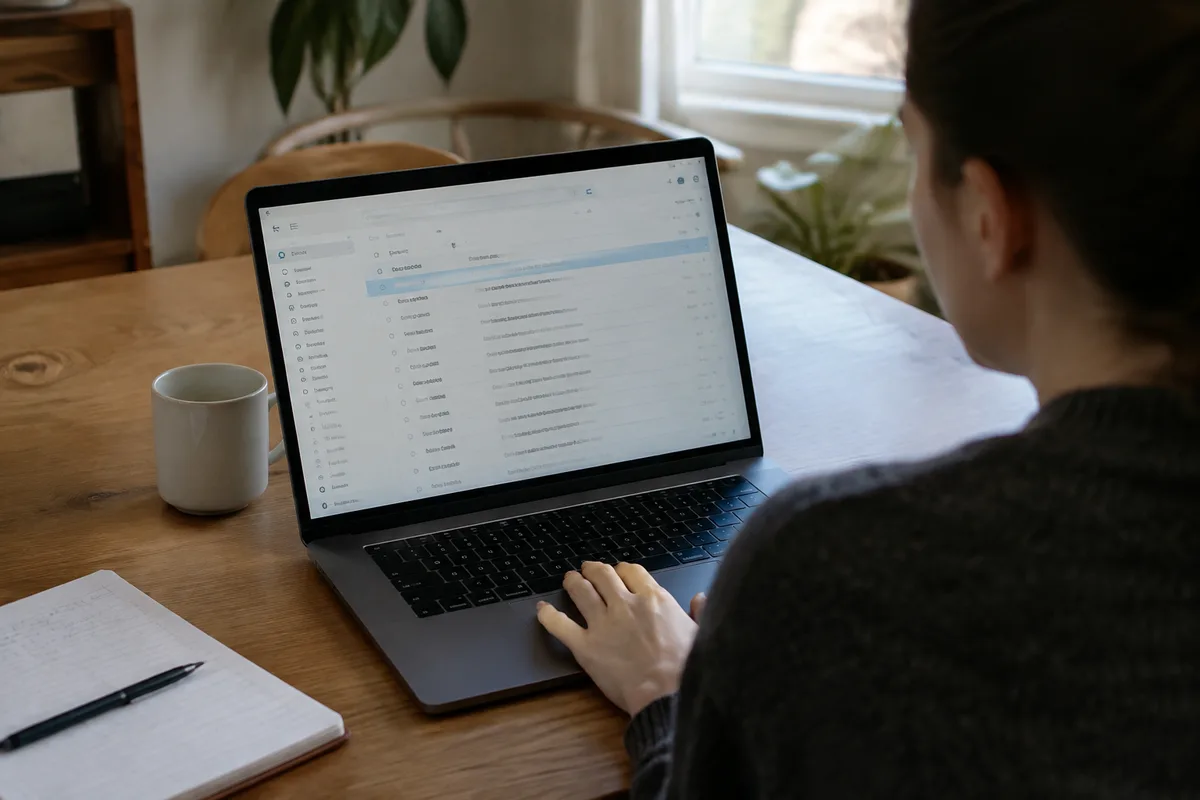
Check the folder list first. Inbox should be distinguishable from sent mail, drafts, deleted items, and spam. An empty main folder does not prove that incoming mail has disappeared.
Check the spam or junk folder when an expected message is missing. Automated filtering can place legitimate messages there, so inspect the sender and subject before marking anything safe or moving it.
Check a message by selecting its subject. Read the sender address, not only the display name, and inspect unexpected links before selecting them. The visible name can be copied by a deceptive sender.
Check the available mailbox controls after opening the message:
- Reply sends a response to the sender.
- Forward sends the message to another address.
- Archive removes it from the main inbox without deleting it.
- Delete moves it toward removal according to the mailbox settings.
- Mark as unread restores the message indicator for later review.
Still, the safest action on a suspicious message is to avoid its links and attachments until the sender is verified through an independent channel. The mailbox interface can help organize messages, but no filter replaces that check.
Check attachment names and file types before opening them. A familiar sender account may have been compromised, and an expected subject line does not guarantee that the attached file is harmless.
What Should You Check Before Trying the Alice Mail Login Again?
Still, a failed login is not automatically a wrong-password problem. The address may contain a typo, the browser may be submitting an obsolete saved credential, the session may be stuck, or the page may have redirected incorrectly; isolate one cause at a time before retrying.
Check the browser session next. Close duplicate login tabs, reload the official sign-in page, and try again without keeping several failed forms open. If an extension blocks scripts or cookies, temporarily test with a clean browser session.
Check the network connection if the form does not submit or the inbox never appears. A page that loads partially can leave the login control visible while the underlying request cannot finish.
Still, do not keep guessing a forgotten password. Use the password-recovery option shown on the official TIM Mail access page, because the available recovery choices and eligibility conditions must be confirmed there rather than reconstructed from unverified advice.
Check the recovery destination carefully. It should remain within the official service flow, and you should never provide a recovery code to someone who contacts you unexpectedly. Persistent access errors require the service’s dedicated support or recovery guidance.
For a broader diagnosis of credential, page, and recovery failures, consult Alice Mail login problems. That resource is useful when the basic form works but access still fails after the address and password have been checked.
Check this decision sequence:
- If the page is suspicious, stop and reopen the official TIM website.
- If the address is incomplete, correct it before testing the password.
- If the password is forgotten, use the official recovery route.
- If the form is frozen, close duplicate tabs and reload.
- If access remains blocked, preserve the exact error message for support.
What to Remember
- Use the official TIM Mail destination for the current Alice Mail service.
- Enter the complete address and password without browser-added changes.
- Verify the inbox, sender address, folders, and spam location after signing in.
- Stop repeated guesses and use the official recovery flow when the password is forgotten.