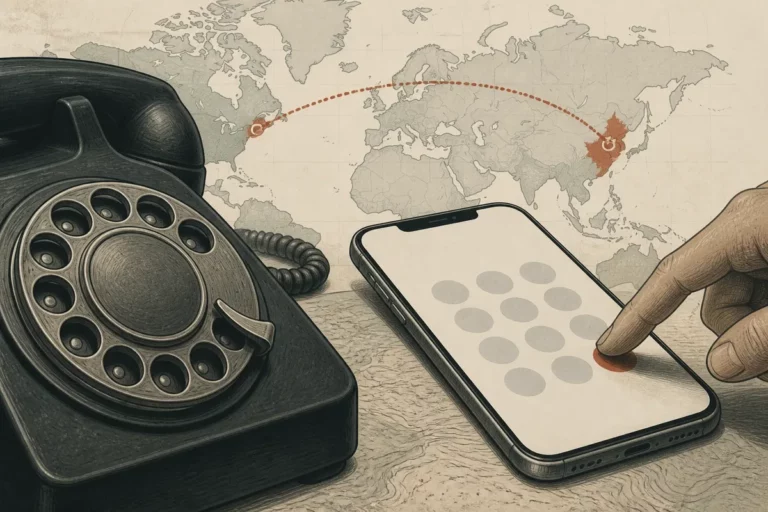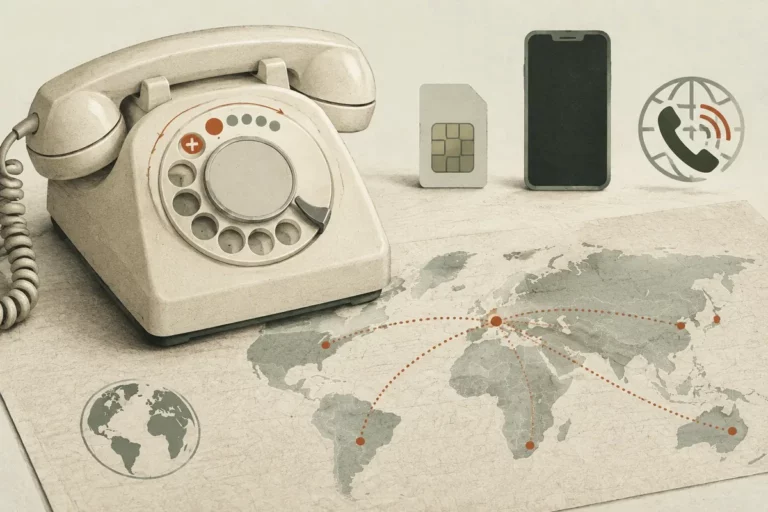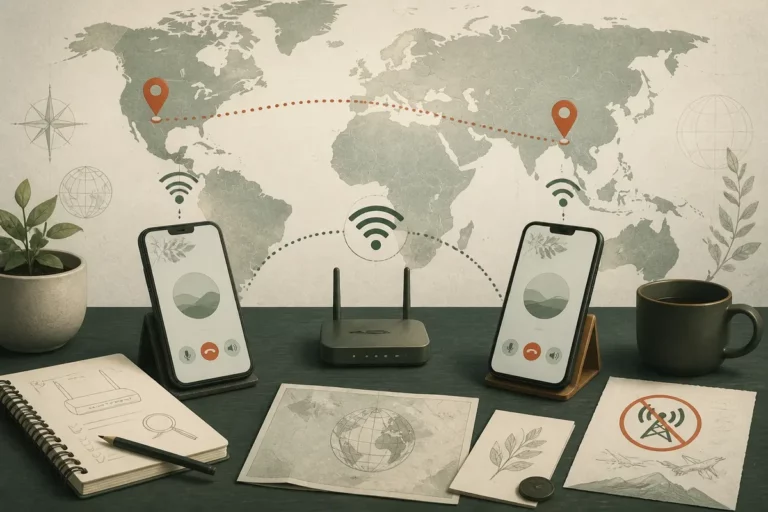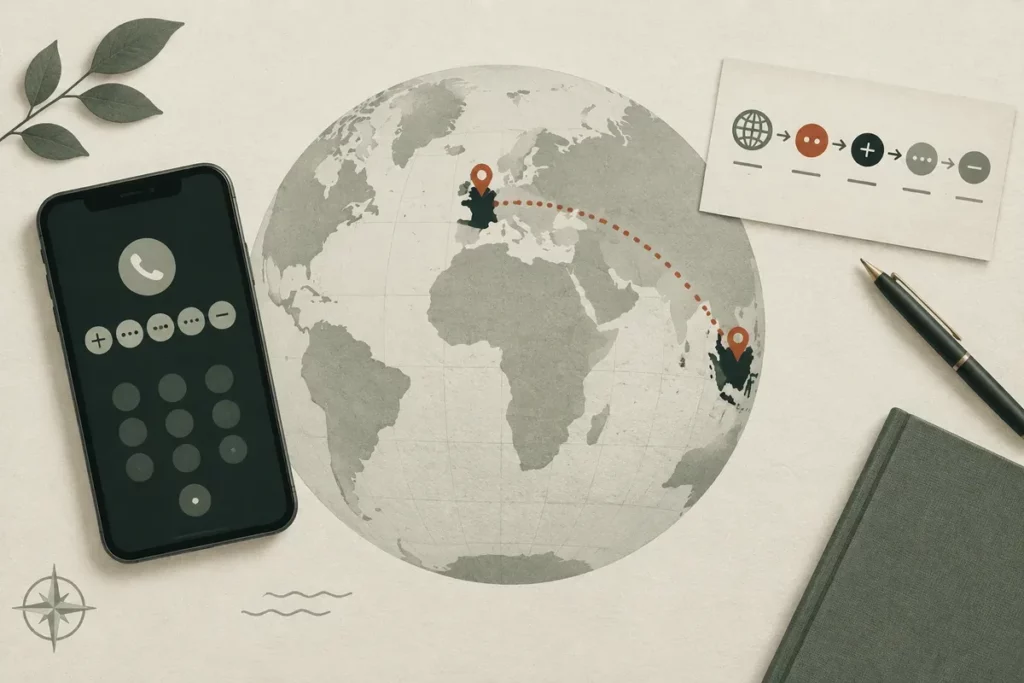
A tariff can change the best way to make international calls, but the dialing format begins with the destination country code. When calling from France, use 00 or the plus sign, remove the destination’s national trunk prefix when required, then enter the full foreign number.
The final cost depends on your French mobile or landline plan, the destination, the type of number, and the route used by the service. An internet app, carrier option, prepaid service, or ordinary international call can each work, but they do not charge or connect in the same way.
How should you dial an international number from France?
But calling from France normally follows this sequence: international access code, destination country code, and the foreign number without its domestic leading trunk digit. On a mobile phone, the plus sign often replaces 00, although destination-specific numbering rules still control the final digits.
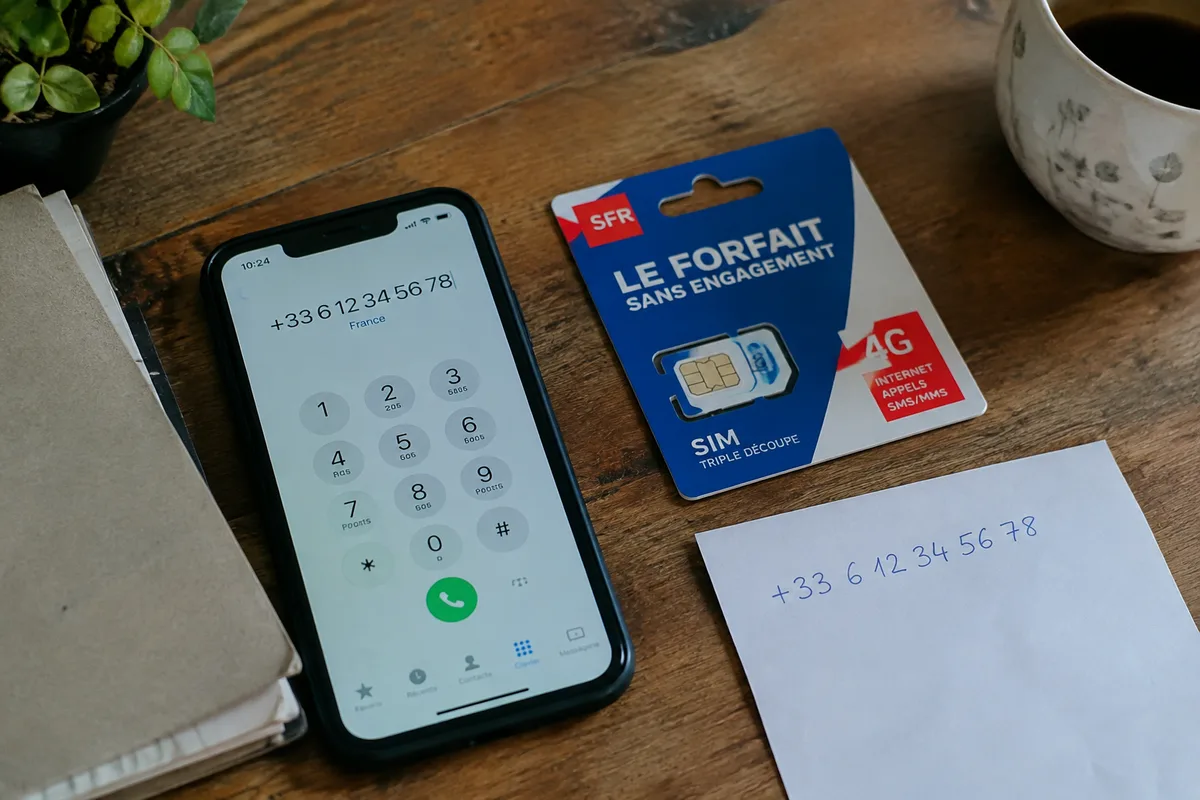
Therefore, start with one of these formats:
| Situation | Format | Example structure |
|---|---|---|
| French landline | 00 + country code + foreign number | 00 1 XXX XXX XXXX |
| French mobile | + country code + foreign number | +1 XXX XXX XXXX |
| Using an app | International format inside the app | + country code + number |
The plus sign is usually the clearest mobile format. It avoids manually selecting an international access code when the phone or application supports it.
For the United States and Canada, use country code +1, followed by the ten-digit number, including the area code. For Mexico, the documented example is +52 followed by the ten-digit number including the area code; do not add the former extra 1 to that format.
Yet “the number starts with a familiar area code” is a dangerous shortcut. An area code identifies part of a national numbering plan; it does not replace the country code. A number beginning with 212, 305, or 514 still needs the correct country code when dialed from France.
For a separate explanation of the sequence, see this practical guide to international exit codes and country numbers. Check the destination’s official numbering guidance when the number belongs to a territory, satellite service, premium service, or special network.
Which method is best for international calls?
But no calling method is universally cheapest or safest. A French carrier call suits a recipient without internet access, while an app can be practical when both people have reliable data and the service clearly identifies its route and price.
Therefore, compare the method with the recipient’s situation rather than with its advertising label.
| Method | Recipient needs | Main billing model | Primary risk |
|---|---|---|---|
| Mobile or landline carrier | Any compatible telephone | Plan rate or per-minute charge | Unexpected international charges |
| Internet calling app | Usually an internet connection or app account | App credit, subscription, or included calling | Recipient may not be reachable through the same service |
| Dedicated calling service | Often an ordinary mobile or landline | Per-minute rate, credit, or package | Destination surcharges and changing terms |
| VoIP or prepaid card | Service access and compatible route | Credit or account balance | Connection fees, expiry rules, or poor routing |
Carrier calling is the direct choice when the other person has no data connection. It also avoids asking the recipient to install an application.
Internet apps can reduce the carrier portion of the call when both parties use the same service. The call still consumes Wi-Fi or mobile data, and the data connection may be billed separately from the voice service.
Yet an app logo does not tell you whether the call will remain inside the app. Some services route calls to ordinary mobile or landline numbers, which creates a different price and destination rule.
Google Voice’s published guidance states that calls made from inside the United States to international telephone numbers are charged at international rates; its installation alone does not establish how a call will be routed. The useful check is the price or confirmation message shown before connection, when the service provides one.
For iPhone users, this explanation of the correct international number format can help distinguish a phone contact’s saved format from the number actually sent to the network.
What does an international call really cost?
But the displayed per-minute rate is only one part of the bill. The total can include a monthly fee, connection charge, destination surcharge, mobile-versus-landline difference, taxes, or roaming costs when the caller is outside the French network.
Therefore, calculate the expected total with this simple model:
Total expected cost = monthly fee allocated to the calls + connection fees + call minutes × destination rate + taxes or surcharges.
A plan may appear attractive for frequent calls to one country and still be unsuitable for occasional calls to several destinations. A prepaid service can offer better spending control, while a standard carrier tariff may be easier to understand for one short call.
Mobile numbers can cost more than landlines in some destination markets. Special international numbers, satellite numbers, and premium services require separate attention because their tariffs can be much higher than ordinary geographic numbers.
Numbers used for telephone services are not ordinary landlines. Calls to international special numbers are chargeable, and the applicable tariff depends on the country and service called.
Or a free label can describe only one part of the connection. An app may charge no voice fee between two registered users, while mobile data, roaming, a paid destination route, or an account subscription remains relevant.
Historical figures need careful handling. The FCC consumer sheet reviewed on May 7, 2024, presents some comparison data based on rates posted in September 2020; those figures illustrate an old pricing context and must not be treated as current French tariffs.
In France, verify the current price in your operator’s international communications tariff. Check the destination, number type, billing increment, connection fee, taxes, and whether the call is made over the French network or while roaming.
How can you avoid failed calls and unexpected charges?
But most failed international calls come from a wrong country code, a retained domestic prefix, a blocked destination, or a route that the chosen service does not support. The fastest fix is to inspect the complete number and the billing route separately.
Therefore, use this diagnostic sequence:
- Confirm the destination country, territory, and number type.
- Replace the domestic trunk prefix with the international format.
- Check whether the number is mobile, fixed, premium, satellite, or special.
- Read the operator or app’s international tariff for that exact destination.
- Confirm that international calling is enabled on the French line.
- Test the route with a short call before making a long conversation.
Wrong number format? Correct the prefix first.
If the call connects to an unexpected destination, stop and verify the country code before trying again. A familiar local-looking number can belong to a different numbering plan or a special service.
Yet the person receiving the call can face a separate issue when abroad. Charges for receiving a call, returning the call to France, or using mobile roaming depend on the recipient’s country, operator, plan, and current roaming terms.
The caller should therefore ask which network the recipient is using before assuming a missed call or callback is harmless. The recipient should check the roaming tariff and voicemail conditions with the home operator.
Emergency calling requires extra caution. An internet application may not support emergency services, may not transmit the caller’s location correctly, or may route through a different country; use the local mobile or fixed network for emergencies when available and follow local instructions.
Call quality also follows the route. A strong Wi-Fi connection can support clear voice traffic, while congested wireless data, weak indoor coverage, latency, or packet loss can create delays and clipped speech.
Privacy deserves one direct check: ask whether the service displays your ordinary number, an account number, or another caller identity. Do not assume that a low price guarantees caller identification, recording protection, or account security.
Which option fits your calling situation?
But the practical choice follows a few concrete facts: how often you call, whether the recipient has internet, whether you need a normal telephone number, and whether predictable billing matters more than the lowest advertised rate.
Therefore, use this decision guide:
- One occasional call to a normal phone: compare your French operator’s exact tariff with a reputable prepaid or dedicated service.
- Regular calls to one country: price a monthly option against the expected minutes, including its fixed fee.
- Both people have reliable internet: an app-based call may be practical, provided both accounts and devices are compatible.
- The recipient has no internet: choose a carrier or service that explicitly reaches the recipient’s mobile or landline.
- You are travelling outside France: check roaming before dialing, receiving calls, or returning a call.
- You need emergency access: use a supported local telephone network, not an app whose emergency compatibility is unclear.
Carrier calling wins here: the recipient can answer an ordinary phone.
App calling wins when both users have compatible accounts and dependable internet.
Or choose a dedicated service when the recipient needs a regular number and the provider publishes a destination-specific tariff. Do not choose a plan from its country count alone; the relevant test is the exact number, route, and expected usage.
For more detail on country prefixes, consult this reference to country calling codes and numbering rules. It can help when the contact’s saved number omits the international prefix or mixes a local format with a country code.
International calling questions answered
But the short answer is straightforward: use the destination country code, remove the destination’s domestic prefix when required, and verify the tariff before connecting. The remaining checks concern the device, network, recipient, and type of number.
Can I make international calls for free?
Some app-to-app calls may have no separate voice charge when both users meet the service’s conditions. Data usage, roaming, subscriptions, or calls routed to ordinary telephone numbers can still create a cost.
Do I need to dial 011 from France?
No. From France, the normal international access code is 00, while the plus sign is commonly used on mobile phones. The code 011 is associated with the United States and should not be copied into a French dialing format.
Should I use a country code for a French overseas territory?
Check the territory and operator tariff first. A familiar French-looking number may follow a separate numbering plan or billing rule, so the country or territory code cannot be guessed safely from the language or caller identity.
Why did my international call fail?
Check the country code, remove the domestic trunk prefix, and confirm that international calling is enabled. Then verify whether the number is premium, satellite, special, or blocked by the chosen service.
What to remember
- Use 00 or the plus sign from France.
- Enter the destination country code.
- Remove the destination’s domestic leading prefix when required.
- Compare the full cost, not only the advertised minute rate.
- Check roaming before calling or receiving calls abroad.
- Verify special, premium, satellite, and mobile destinations separately.
Sources useful for checking current details
But tariffs and routing conditions change, so the operator’s current tariff remains the decisive source for a French call. Use government or regulator guidance for general dialing information, then confirm the commercial terms directly with the service handling the call.
Therefore, check the following before calling:
| Source | What it confirms | Practical use |
|---|---|---|
| Your French operator | Current international and roaming tariffs | Calculate the likely final charge |
| Destination numbering authority | Country code and national number format | Prevent incorrect routing |
| FCC consumer guidance | General international-calling warnings and dated examples | Understand mobile, landline, and historical pricing differences |
| Calling app or service tariff | Route, destination price, fees, and account conditions | Confirm what the service will actually bill |
Before calling, write the number in international format and check its destination, network, and number type. If any decisive detail remains unknown, do not guess: verify the current tariff and routing conditions before dialing.