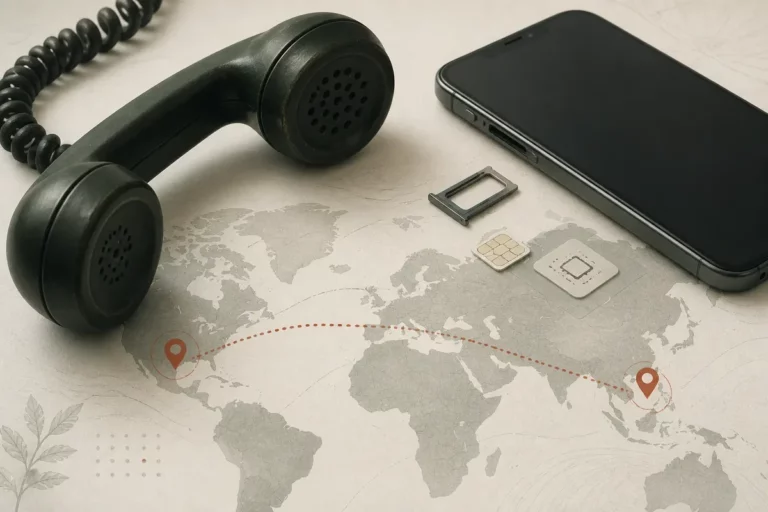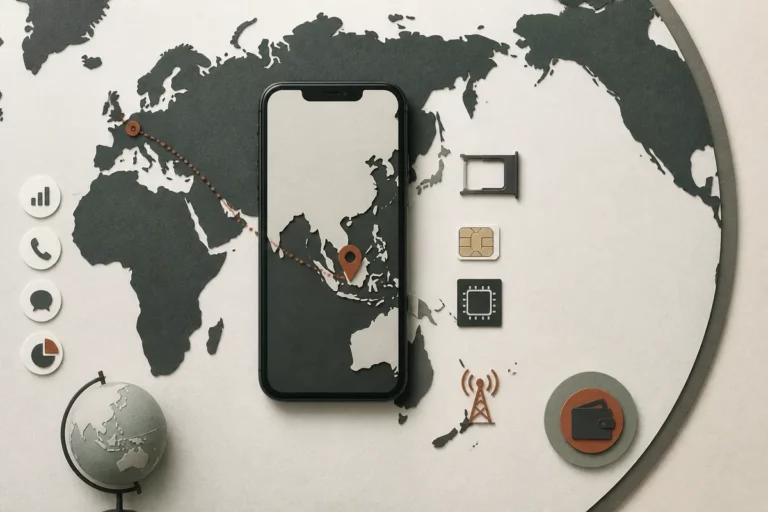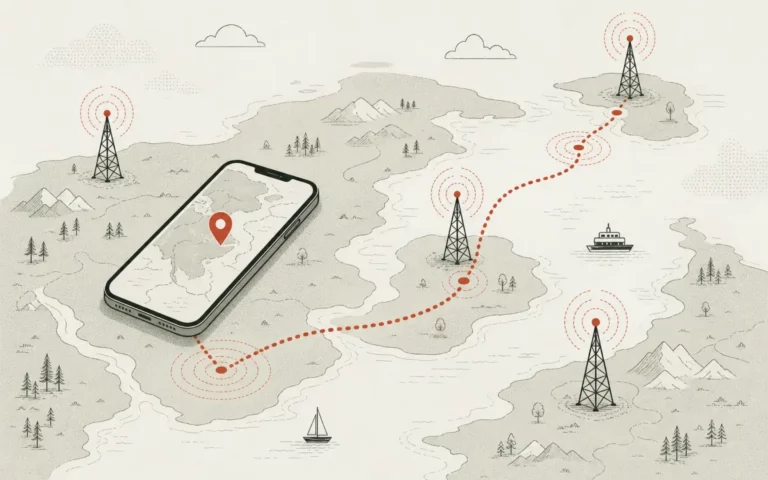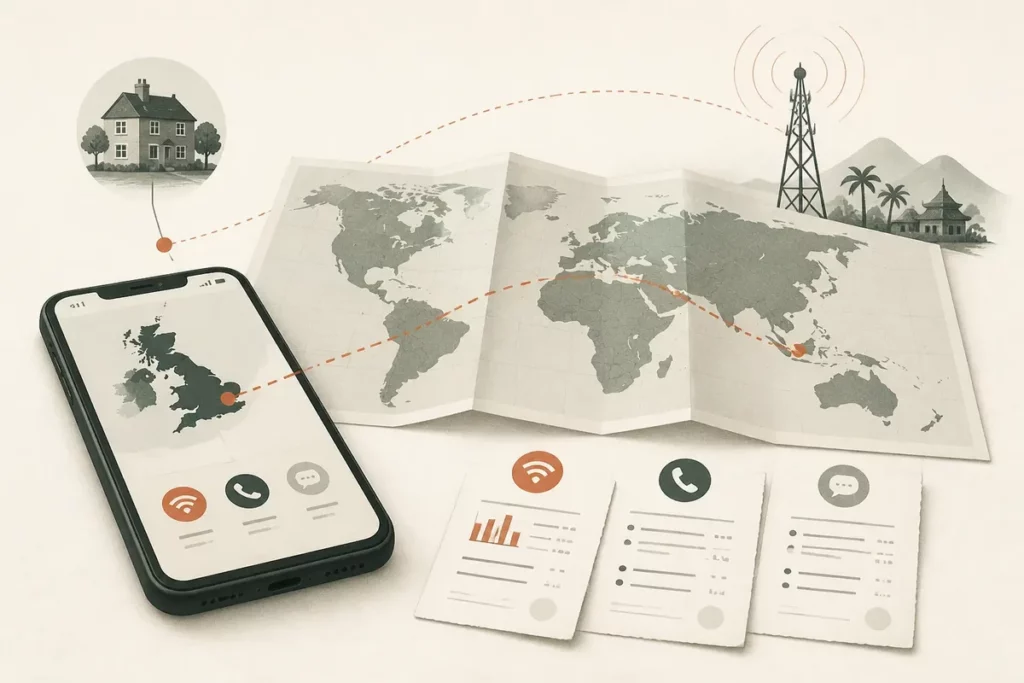
A tariff abroad can create international roaming charges when your phone connects to a foreign mobile network, even if you make no obvious call. The amount depends on your carrier, plan, destination, visited network, device settings, and services used. Check the exact destination terms before departure.
International roaming charges may cover mobile data, outgoing and incoming calls, texts, MMS, voicemail, and hotspot use. A domestic plan does not automatically cover usage abroad, while an international call made from home usually follows a different rate table.
Quick facts
📱 Roaming starts when your phone attaches to a foreign network while your home provider remains responsible for billing.
💳 There is no universal international roaming price. The carrier, destination, plan, network, and service determine the final amount.
🛑 Turn off data roaming before travel when cellular data is unnecessary, then check voice, text, voicemail, and Wi-Fi Calling rules separately.
🌍 Ships, aircraft, border areas, and satellite networks require extra caution because standard land-roaming terms may not apply.
When do international roaming charges apply?
However, international roaming charges apply when a mobile device uses a foreign partner network while the home carrier continues billing the customer. The connection may support data, calls, texts, MMS, voicemail retrieval, or tethering. The exact treatment comes from the carrier’s destination-specific terms.
Therefore, switching on a phone abroad can create usage before you open a browser. App refreshes, cloud backups, push notifications, operating-system updates, photo synchronisation, and automatic network selection can transmit data in the background.
Roaming begins with the network connection, not with a visible web page. A phone may register with a visited network as soon as cellular service becomes available. Short connections count.
Yet the place and network matter. A national border, overseas territory, cruise route, aircraft cabin, or satellite system can place the device under a different charging arrangement.
Roaming abroad versus international calling
International roaming describes mobile use abroad through a foreign network. International calling describes a call placed from the home country to a foreign number. The two services can have separate allowances and rate tables.
For example, a customer in the United States calling a French number from a domestic network is making an international call. The same customer carrying the phone in France and using a French partner network is roaming abroad.
Roaming follows the device’s physical network location. International calling follows the number dialled from the home network.
Why can a phone use roaming data without browsing?
Background services can use cellular data immediately after a phone registers abroad. Notifications, account synchronisation, navigation updates, cloud storage, and application refreshes may operate without a deliberate browsing session.
Therefore, an unlocked screen is not required. Receiving a notification can be enough.
A plan may charge that traffic by unit, deduct it from an allowance, activate a travel pass, or block it after a spending limit. The carrier’s terms decide which event occurs.
How do roaming charges show up on your phone bill?
Yet roaming billing often separates each service instead of presenting one simple travel total. A statement may show the date, destination, visited network, service category, data volume, call duration, pass fee, taxes, or surcharge. Labels and posting dates differ between providers.
Therefore, a usage alert is only an interim signal. The FCC explains that international roaming charges may appear after an additional billing cycle, so a charge can arrive after the traveller has returned home.
| Bill item | What may trigger it | What to verify |
|---|---|---|
| Mobile data | Browsing, navigation, syncing, updates, or hotspot use | Allowance, unit, pass trigger, and fair-use limit |
| Outgoing call | Calling a domestic or foreign number while abroad | Destination, minute rate, and included voice allowance |
| Incoming call | Answering a call while connected to a foreign network | Incoming-call treatment for the exact destination |
| SMS or MMS | Sending or receiving carrier messages | Message type and plan coverage |
| Voicemail | Call diversion, notification, or message retrieval | Carrier routing and retrieval rules |
| Travel pass | First eligible use, daily renewal, or billing-period activation | Activation time, covered services, and renewal terms |
Data, calls, texts, and voicemail can follow different rules during one trip. A traveller may have data included while paying separately for an incoming call or voicemail retrieval.
Billing units also deserve attention. A provider may use units, rounding rules, minimum billable periods, conversion methods, or separate tax treatment described in its current terms. Check those details before comparing two offers.
What happens to data roaming allowances?
Data roaming charges can be deducted from an included allowance, billed through a travel pass, or charged on a pay-as-you-go basis. Navigation, video, social feeds, photo uploads, software updates, and tethering consume more data than short text messages.
Therefore, reaching an allowance threshold can reduce speed, create an additional pass period, suspend data, or generate extra charges, depending on the plan.
Messaging is light. Video is not.
Can incoming calls, texts, and voicemail cost money?
Incoming calls may create a charge while roaming, even when the traveller did not initiate the call. Voicemail can also involve diversion or retrieval traffic, while SMS, MMS, and app messages may use different billing systems.
A missed call and an answered call are not automatically treated alike. The carrier’s rate table must identify each event.
Wi-Fi messaging through an application does not automatically change the treatment of ordinary cellular voice, SMS, or voicemail.
Illustrative roaming bill breakdown
The following example is hypothetical and does not represent a typical price. It shows how a travel pass, mobile data, an outgoing call, and voicemail could appear as separate items under a plan whose exact terms must be checked first.
| Hypothetical item | Illustrative treatment | Why the total is uncertain |
|---|---|---|
| Travel pass | Activated after the first eligible data session | Activation rules differ by carrier and destination |
| Mobile data | Deducted from the pass allowance | Background use may count before the traveller notices |
| Outgoing call | Included or billed separately | Voice coverage may differ from data coverage |
| Voicemail | Possible separate voice usage | Routing and retrieval depend on the carrier setup |
The total in this example cannot be calculated without the carrier, destination, activation trigger, included services, and billing period. Treat any generic online price as an illustration until the official rate page confirms it.
What determines the final cost of using your phone abroad?
Thus, the final phone roaming cost comes from several linked variables: home provider, plan, precise destination, visited network, service type, volume used, trip duration, device compatibility, and pass or allowance status. The provider’s terms for the exact travel dates remain the reliable price reference.
Therefore, a country label alone is insufficient. A plan may include one territory, exclude a nearby island, and treat a maritime network separately.
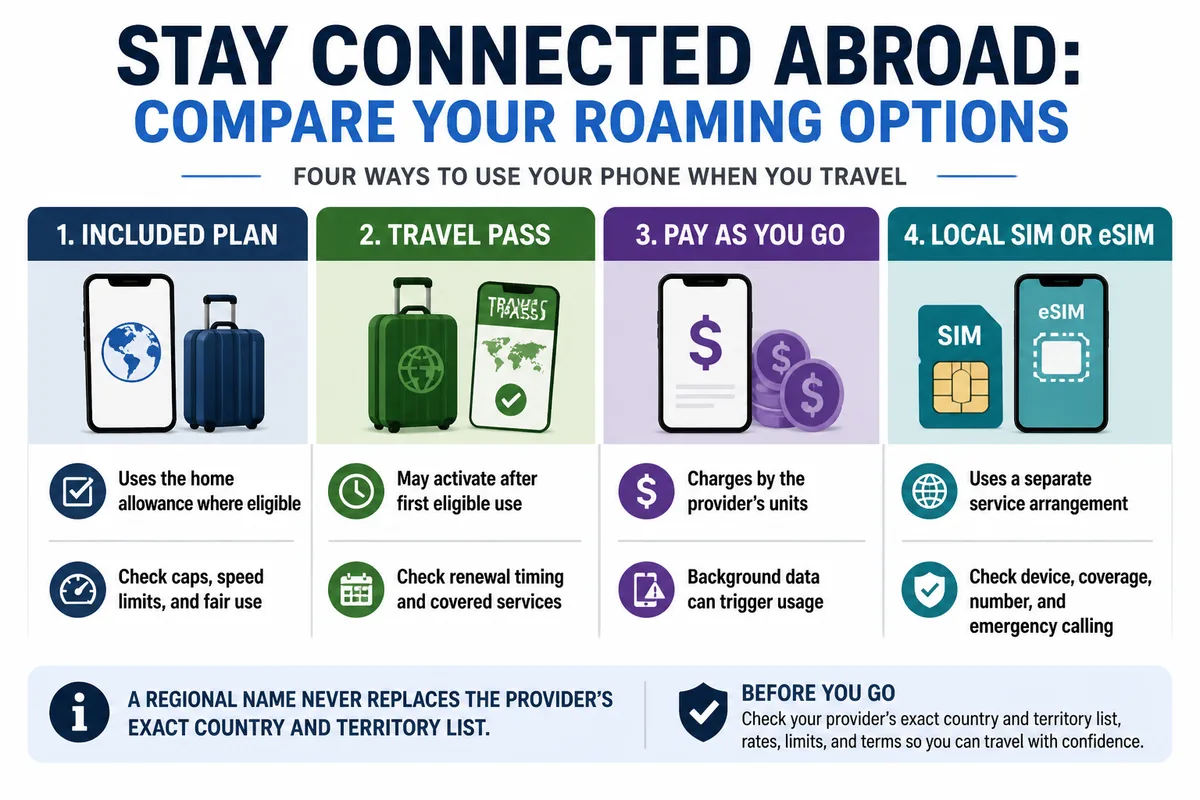
Included roaming, travel passes, and pay-as-you-go pricing
Included roaming usually offers the simplest billing path when the destination qualifies. A travel pass may activate on first eligible use, renew daily, or run for a defined billing period. Pay-as-you-go billing charges according to the provider’s units for data, minutes, or messages.
Included service can still contain country exclusions, data caps, speed restrictions, or fair-use conditions. An unlimited domestic plan does not automatically create unlimited international data.
Pay-as-you-go is the wrong choice for an unmanaged high-data trip. Choose a defined allowance instead.
Regional rules, fair use, and excluded networks
Consumer rules and wholesale rules operate at different levels. In eligible European Union use, retail roaming treatment may follow home-plan conditions, while wholesale caps govern payments between operators; those are not the same price.
Under Regulation (EU) 2022/612, the cited wholesale cap for voice is €0.019 per minute, the cited SMS cap is €0.003 per message, and the cited data cap is between €1.00 and €2.00 per gigabyte through 2032. These are wholesale figures, not universal consumer prices.
The European Union removed roaming surcharges within its regulated scope on 15 June 2017. Eligibility, residence, fair-use controls, plan terms, and destination coverage still require checking.
Use the official EUR-Lex legal database for the applicable regulation and scope.
How can you avoid unexpected roaming fees before and during a trip?
Or, the safest prevention sequence is straightforward: verify every destination, control cellular use, prepare offline content, and monitor both the phone and carrier account. Wi-Fi and airplane mode help only when their limits are understood and their settings remain active.
Therefore, check the carrier’s official destination tool for every country, territory, border crossing, and transit stop. Confirm the plan type, pass activation trigger, renewal time, included allowance, spending controls, excluded networks, and fair-use policy.
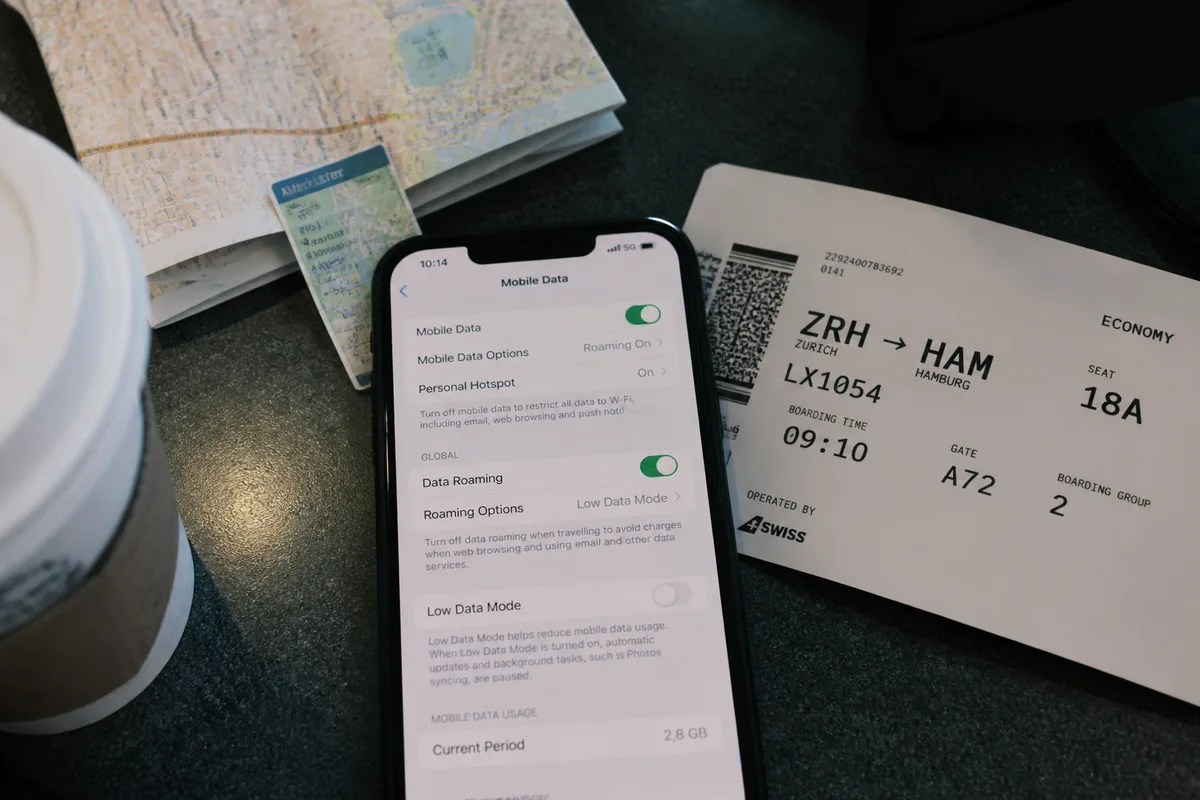
Checks to make before departure
Verify whether roaming is included, pass-based, or pay-as-you-go for the precise destination. Download maps, tickets, translation files, entertainment, and essential documents before leaving the home network.
Review allowance sizes, spending caps, automatic activation, renewal timing, and access to the carrier account abroad. Save the provider’s support number through an offline method.
Offline preparation removes several background-data triggers. It does not rewrite the carrier’s voice or messaging terms.
-
Check the destination
Enter every country, territory, transit point, and travel network into the provider’s official checker.
-
Check activation
Confirm whether the first call, message, data session, or network connection activates a pass or charge.
-
Prepare offline
Download maps, tickets, documents, and other content before departure, then restrict automatic updates and backups.
-
Monitor usage
Review device data counters and carrier alerts, remembering that notifications may not update instantly.
Which settings reduce mobile data abroad?
Turn off data roaming when cellular data is unnecessary. That setting generally blocks mobile data roaming, yet it does not automatically block voice calls, SMS, or every voicemail-related charge.
Airplane mode disconnects cellular service while it remains enabled. If Wi-Fi is switched back on, verify that cellular service has not been restored through another setting.
Disable automatic application updates, cloud photo backup, hotspot use, and unnecessary background refresh over cellular data.
What can Wi-Fi prevent?
Wi-Fi normally prevents cellular data roaming for internet traffic carried over that Wi-Fi connection. Wi-Fi itself may have a usage charge, and Wi-Fi Calling, SMS, voice fallback, and carrier policy can produce different results.
Therefore, use a trusted network and inspect the phone’s connection indicator before making a call or downloading files.
Wi-Fi reduces one exposure. It does not settle every billing category.
Which alternatives to carrier roaming fit different trips?
And the practical choice is a trade-off between price predictability, number continuity, coverage, data volume, and setup effort. A carrier pass suits continuity, a local SIM or eSIM may suit extended data use, and Wi-Fi-only use reduces cellular exposure while limiting availability.
| Option | Useful when | Important checks | Main limitation |
|---|---|---|---|
| Carrier travel pass | You need the existing number and simple billing | Activation, renewal, allowance, destination list | Daily or period charges may apply |
| Local SIM | You stay in one country and need local service | Unlocked device, local coverage, number changes | Home-line calls and texts may be affected |
| Travel eSIM | You need a secondary data line across eligible destinations | eSIM support, installation, coverage, hotspot rules | Data service may exclude voice and SMS |
| Wi-Fi only | You can plan around fixed trusted connections | Calling apps, verification codes, emergency access | Connectivity disappears away from Wi-Fi |
| Pay as you go | Usage is rare and tightly controlled | Unit price, rounding, minimums, spending limit | Background activity can be costly |
Local SIMs and travel eSIMs do not automatically stop the primary line from roaming. A dual-SIM phone needs a deliberate choice of data line, and the home line may still connect for calls, texts, or cellular fallback.
For a short trip with a stable number requirement, a verified carrier pass is usually the cleaner choice. For a longer stay with heavy data use, compare a compatible local SIM or eSIM against the carrier’s destination price.
Need app-based calling over Wi-Fi? Review these ways to call abroad with apps, then check whether the recipient and network support the chosen service.
How should dual-SIM and eSIM settings be configured?
Set the intended travel SIM or eSIM as the mobile-data line, disable automatic data switching, and turn off data roaming on the home line. Keep the home line active only when its calls, texts, or verification messages are genuinely needed.
Check the setting after installation. A software update or device restart can expose a different default.
Emergency calling requirements also deserve attention because a data-only eSIM may not provide ordinary voice service.
What should you do when an unexpected roaming charge appears?
Yet an unexpected charge should be checked against evidence before it is treated as a billing error. Identify the date, location, visited network, service category, amount, plan terms, pass history, and carrier notifications, then request an itemised review from the provider.
Therefore, save screenshots of the account dashboard, roaming alerts, device settings, travel itinerary, and network name. The provider may need those details to classify a border, maritime, airline, or satellite connection.
Ask which visited network generated the item, whether a travel pass activated, when its billing period began, and which services it covered. Ask whether maritime, airline, border, or satellite treatment was applied.
Questions to ask the provider
- Which destination and visited network produced the charge?
- What service generated the usage: data, voice, SMS, MMS, voicemail, or hotspot?
- Did a travel pass activate, and what event triggered it?
- Which allowance, fair-use condition, or excluded-service rule was applied?
- Can the provider supply an itemised usage record?
A dispute is a request for review, not a guaranteed refund. If the item conflicts with the published plan terms, state the conflict precisely and retain the provider’s response.
Do not rely on the date the charge first appears. Network records can arrive later.
Remember this
- Check the exact destination and network. Regional labels can hide territory exclusions.
- Separate data from voice. Turning off data roaming does not settle incoming calls, SMS, or voicemail.
- Treat ships and aircraft separately. Satellite roaming can follow third-party pricing.
- Keep evidence. Screenshots and itemised records make a provider review more precise.
Frequently Asked Questions
Do you get charged for receiving calls abroad?
Incoming calls may create international roaming charges, depending on the destination and roaming plan. The provider’s current rate table determines whether the call is included, billed separately, or handled under a pass.
Does turning off data roaming stop all roaming charges?
Turning off data roaming generally blocks cellular data roaming. Voice calls, SMS, MMS, voicemail, and some carrier services can still create charges under the provider’s terms.
Can Wi-Fi prevent roaming fees?
Wi-Fi usually prevents cellular data roaming for internet traffic carried through that connection. Wi-Fi Calling, ordinary voice, SMS, cellular fallback, and the Wi-Fi network itself can follow separate rules.
Does airplane mode always prevent roaming charges?
Airplane mode disconnects cellular service while it remains enabled. Verify the settings after restoring Wi-Fi or other wireless connections, because reactivation can change what the phone uses.
How can you check roaming charges before traveling?
Use the provider’s official destination checker, current plan terms, account dashboard, and support channel. Check every country, territory, transit stop, activation trigger, included service, allowance, and excluded network.
Can an unexpected roaming charge be disputed?
You can request an itemised usage record and ask the provider to review the charge. Any adjustment depends on the plan terms, network classification, timing, and evidence available.
Verify the exact destination terms, control cellular use deliberately, and review itemised records before calling your provider if a charge looks inconsistent.