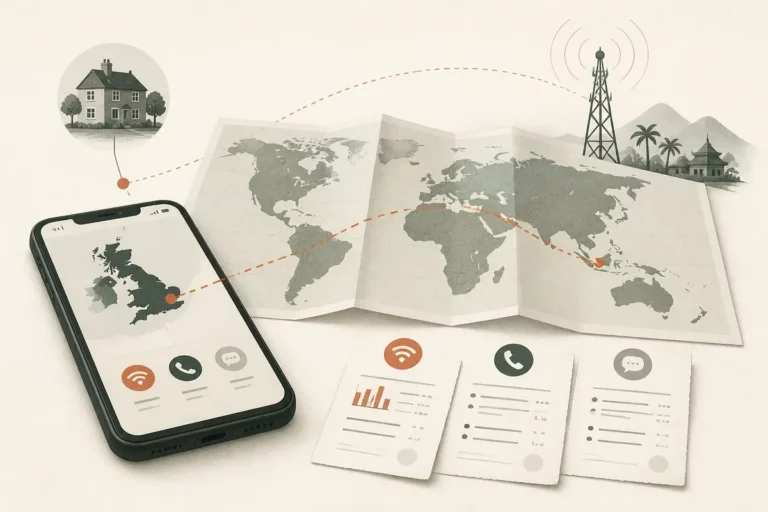
Before you dial, look at the digits immediately after the plus sign. An international phone number is generally written with a plus sign, country calling code, and national or subscriber number, with the trunk prefix removed where applicable. To call internationally, use the plus sign on a mobile device or the applicable international exit code, then the country code and destination number. That code identifies the numbering plan associated with a country or territory, not the caller’s current location or identity.

A practical check takes four actions: normalize the number, read the opening digits, compare the complete country calling code with a reliable directory, and confirm the number type. Treat the result as a routing clue. Caller ID can be spoofed, a number can be forwarded or virtual, and a foreign code can appear on a device located in your own country.

What can an international phone number tell you?
Still, an international phone number can usually reveal the country or territory assigned to its country calling code, provided the number is complete and correctly formatted. The remaining digits may indicate a geographic area, mobile service, business range, or special service, although those details require a separate numbering-plan check.
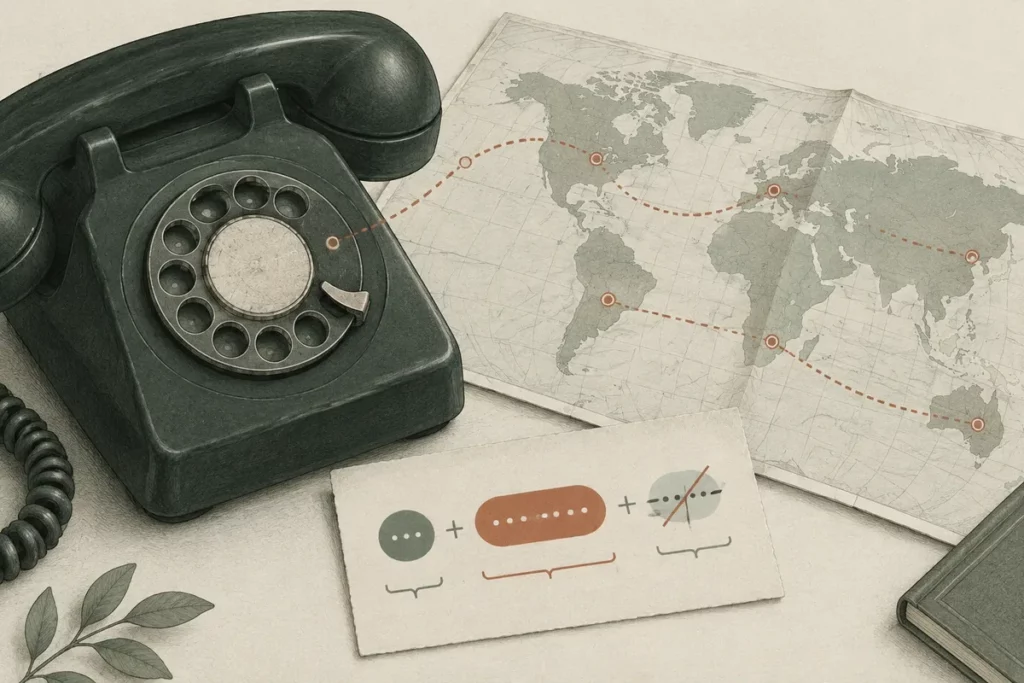
Check the number as a sequence rather than as a familiar local pattern. The plus sign signals international notation. The country calling code identifies the national numbering plan. An area code or city code narrows the assigned region in some countries. A mobile prefix identifies a service range, while the subscriber number identifies the individual line within that range.

Check the distinction between writing and dialing. The number +44 20 7946 0958 is a written international format for a United Kingdom number. A person calling from a compatible mobile device can usually enter that plus-format number directly. A caller using a landline may need the international exit code of the country where the call begins.

Check the national trunk prefix before adding the country code. In many numbering plans, a leading zero provides access to a domestic route and is removed in international format. For example, the French number 01 42 68 53 00 becomes +33 1 42 68 53 00, not +33 01 42 68 53 00.
Check the E.164 framework when a website, CRM, or messaging platform requests a standardized number. The ITU-T Recommendation E.164 describes international public telephone numbering, while human-readable displays may retain spaces for easier reading. A stored value normally keeps the plus sign and digits without spaces or dashes.
Check the number’s status separately. A correctly formatted number can still be unassigned, disconnected, restricted, or unreachable from your network. An assigned number can also be redirected to another device through call forwarding.
How do you identify the country from a phone number?
Still, identify the country by matching the longest valid opening code after the plus sign with a trusted country-code directory. Do not stop at the first digit, because country calling codes contain one, two, or three digits, and shared numbering plans require additional digits for a useful result.
Check the visible number first. Keep the plus sign if it appears, remove spaces, brackets, hyphens, and extension notes for your own inspection, and avoid posting the complete number publicly.
Step 1: Convert the number to international format
Check whether the number already begins with +. If it begins with 00, treat that sequence as a possible international access prefix and inspect the digits after it. If it is written only in local form, you need the country where the number was issued before conversion can be reliable.
Check the leading zero carefully. A zero used as a national trunk prefix is removed after the country code is added, but a zero that belongs to the significant national number must remain. The distinction comes from the numbering plan, not from a universal formatting shortcut.
- French local format: 01 42 68 53 00.
- International display: +33 1 42 68 53 00.
- Digits-only storage example: +33142685300.
Check the country context before applying that example to another nation. United Kingdom numbers, mobile ranges, business numbers, and special services may use different domestic structures.
Step 2: Read the first one to three digits
Check the opening digits in these examples:
| International opening | Associated numbering plan | What to inspect next |
|---|---|---|
| +1 | North American Numbering Plan | Area code and the complete national number |
| +33 | France | National number after the removed trunk prefix |
| +44 | United Kingdom | Geographic, mobile, or special-service range |
| +49 | Germany | Area code or mobile range |
| +52 | Mexico | National format and current dialing context |
| +61 | Australia | Geographic or mobile prefix |
| +81 | Japan | Area or mobile service range |
Step 3: Check the code against a trusted directory
Check the complete code against the current country-code list published through the ITU-T E.164 numbering framework or a national regulator. A general web search can surface outdated lists, copied errors, or pages that confuse telephone codes with ISO country abbreviations.
Check whether the result names a country, a territory, or a shared numbering zone. That wording matters. A country calling code may cover more than one jurisdiction, and a territory may have its own assigned code or share a broader plan.
Check the directory date when one is shown. Numbering assignments and service ranges change, so a page without an update date deserves less confidence than a current official reference.
Step 4: Confirm the number type and context
Check whether the number is mobile, landline, virtual, satellite, toll-free, premium-rate, or another special service. The country code may be correct while the number type changes the likely cost, coverage, routing, and ability to receive calls or texts.
Check the surrounding message or call history without trusting it as proof. A bank, delivery company, government office, or familiar contact should still be verified through a website or statement you already trust.
Check the final result in this order:
- Normalize the number and identify its international format.
- Match the longest valid opening code after the plus sign.
- Verify the code and its country or territory in a reliable directory.
- Check the number type and context before drawing conclusions.
Which country-code examples have important exceptions?
Check these common codes as starting points rather than as an exhaustive list:
| Country or zone | Country calling code | Practical warning |
|---|---|---|
| United States and Canada | +1 | The area code is required to distinguish locations within the shared plan. |
| France | +33 | Remove the domestic leading zero from a standard French geographic number. |
| United Kingdom | +44 | Remove the domestic leading zero from examples such as 020 or 07. |
| Germany | +49 | Area-code lengths vary, so do not assume a fixed national pattern. |
| Mexico | +52 | Check the current carrier or regulator procedure for the calling origin. |
| Australia | +61 | The domestic leading zero is handled differently after conversion. |
| Japan | +81 | Confirm whether the remaining digits represent a geographic or mobile range. |
Why does +1 require more digits?
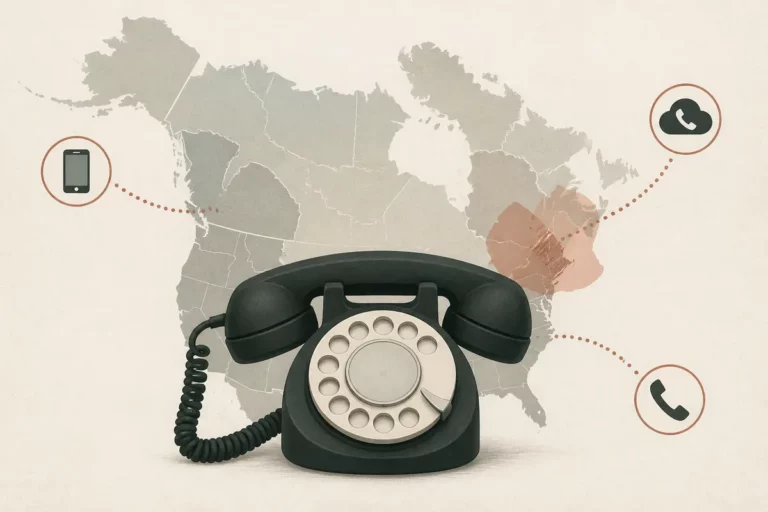
+1 is shared by the United States and Canada, so the country calling code alone does not distinguish between them. Read the following area code and check the complete number against a current numbering-plan directory. The code is a useful starting point, not a country identification on its own.
Special and non-geographic numbers
Check special numbers separately from ordinary geographic and mobile numbers. Emergency lines, short codes, premium-rate services, satellite numbers, toll-free ranges, and some business platforms may not accept ordinary international dialing or may carry a different surcharge.

Check French numbers beginning with 08 before calling from abroad. Many services using 08 are not directly reachable from outside France, and a foreign carrier may reject the call even when the number appears correctly formatted.
Check the carrier’s international route before trying a short or premium number. A normal country-code lookup cannot tell you whether the service is reachable from your network.
What can an international number not prove?
Check the difference between an assigned location and a device location. A person can travel with a domestic SIM, use roaming abroad, forward calls to another country, or use a virtual number hosted elsewhere.

Check porting and reassignment as well. A subscriber may keep a number after changing carriers, and a recycled number may later belong to another person. The original carrier or geographic association may therefore tell you less than the caller claims.
Check caller ID spoofing before returning an unexpected call. Spoofing allows a displayed number to imitate a familiar business, local exchange, or foreign country code, so the screen alone cannot establish authenticity.
Check reverse phone lookup limitations. Public directories may identify a business or a publicly listed line, but they cannot reliably reveal the private individual using every international number.
A country code answers “which numbering plan?” It does not answer “who is calling?”
How should you handle an unknown international number?
Still, an unexpected international call deserves verification before engagement, especially when the caller creates urgency or asks for payment, login details, one-time codes, or remote access. Identify the associated numbering plan, then decide whether the contact has a legitimate reason to reach you.
Check the number without calling back immediately. Search the organization’s official website manually, review a known account statement, and compare the contact details with information you already possess.
- Do not publish the complete number in a public forum.
- Do not send passwords, payment details, or verification codes.
- Do not install software because an unknown caller instructs you to do so.
- Do not assume a local-looking number is safer than a foreign one.
Check the cost before returning a call. The country, number type, carrier, roaming status, and calling plan can affect the final charge, and a displayed country code does not reveal the applicable roaming rate.
Check the operator’s price list for the exact destination and number category. Calls to ordinary landlines, mobile numbers, premium services, satellites, and special business ranges may be billed differently.
Check Belgium-specific pricing only when Belgium is the originating country. For calls from Belgium to the European Union, Norway, Iceland, and Liechtenstein, the regulated consumer cap for consumption-based international calls is €0.23 per minute including VAT, according to the supplied regulatory information; alternative operator tariffs can be higher, while prices to other countries are freely set.
Check roaming separately from an international call made at home. Within the European Union, Norway, Iceland, and Liechtenstein, national tariffs apply to roaming under the stated framework, but your plan, fair-use terms, and service category still require confirmation from the carrier.
Check independent contact details when the caller claims to represent an organization. Use the phone number printed on an official card, statement, or website that you reached without following the caller’s link.
Check your carrier’s blocking and reporting options after repeated unwanted calls. Preserve dates, displayed numbers, messages, and screenshots if a complaint or fraud report becomes necessary.

How do international numbers behave in apps, forms, and messages?
Still, the same number may need different presentation rules in a phone app, website form, CRM, WhatsApp profile, or SMS workflow. The safest shared principle is to store the complete international number while displaying a readable version for people.
Check whether the form expects a plus sign. Some forms accept +44 20 7946 0958, while others require digits only after the country selector has already supplied +44. Entering the code twice can create an invalid number.
Check the storage format used by business systems. A normalized E.164-style value avoids duplicate records caused by spaces, brackets, or local notation, but validation should still apply the destination country’s numbering rules.
Check WhatsApp or similar messaging services separately from ordinary voice calls. The app may recognize the international number through the account registration, yet a visible country code still does not prove that the account belongs to the person or organization named in a message.
Check SMS verification when a code fails to arrive. Short codes may not work internationally, some carriers block automated messages, sender IDs can be rewritten, and roaming or virtual-number policies can prevent delivery.
Check call forwarding and Wi-Fi calling before assuming a failed call means the number is invalid. The issue may be carrier coverage, a disabled feature, a blocked destination, or a route unavailable to your plan.
Check the final cost rather than the advertised access method. A Wi-Fi calling route, VoIP application, mobile plan, and traditional carrier call can apply different fees even when they reach the same country.
Frequently asked questions about international phone numbers
How many digits can an international phone number contain?
Under the E.164 numbering framework, an international phone number can contain up to 15 digits, excluding the plus sign. The country calling code uses one to three digits, and the remaining digits form the national number.

Do all international phone numbers include an area code?
No. Geographic landlines may use an area or city code, but mobile, toll-free, premium-rate, satellite, and other non-geographic numbers can follow different structures.
Why do some international phone numbers contain letters?
Letters usually represent a vanity number, where words are mapped to digits on a telephone keypad. International dialing systems generally process the corresponding digits rather than the letters themselves.
Final verification before you respond
Still, the safest final check is simple: confirm the country code, inspect the complete number type, verify the caller through an independent channel, and compare the carrier’s final rate before returning the call.
Check the number privately. Check the organization independently. Check the charge first.
When the caller pressures you, stop the exchange and use an official contact route instead; verify the country association without treating it as proof of identity, then dial safely.